
Introduction
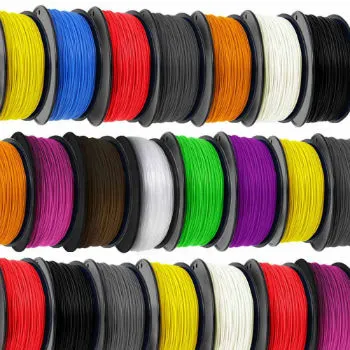
3D printing filaments are widely available today, with countless brands offering similar-looking materials. While purchasing filament is simple, achieving reliable performance from a printed part is far more complex.
An engineering problem cannot be solved by material supply alone. It requires understanding how that material will behave in a specific application.
Filament Is Only One Part of the Equation
A filament may have excellent advertised properties, but those properties do not automatically translate into functional performance. Factors such as print orientation, layer bonding, geometry, and load conditions strongly influence part behavior.
Selling filament without considering these factors often leads to parts that look good but fail during use.
Understanding the Application Matters
Engineering-led workflows begin by understanding what the part is expected to do. Will it carry load? Will it be exposed to heat or vibration? Is surface finish or dimensional accuracy critical?
These questions guide not just material choice, but also design and printing strategy. Without this understanding, filament selection becomes guesswork.
Engineering Guidance Reduces Risk
When filament selection is backed by engineering judgment, risks are identified early. Potential failure modes are addressed before printing begins, saving time and material.
This approach reduces trial-and-error printing and improves confidence in part performance.
Long-Term Performance Over One-Time Sales
A sales-driven approach focuses on moving products. An engineering-driven approach focuses on long-term success and reliability.
By prioritizing performance over transactions, engineering-led providers help customers build parts that last—not just parts that print.
Conclusion
Selling filament is a transaction. Solving an engineering problem is a process. Without application understanding and validation, filament alone cannot guarantee success.
Engineering-first thinking turns material supply into a complete solution.